What to Expect During a 5-Day Accelerated TMS Week: An Hour-by-Hour Guide
A realistic, hour-by-hour walkthrough of a 5-day accelerated TMS treatment week — what each day feels like, when you're in the chair, and what your afternoons look like.
One of the most common questions we get from prospective patients is deceptively simple: what does the week actually look like? Not the clinical summary, but the real texture of it — when you arrive, how long you're in the chair, what happens between sessions, and what your afternoons are like. This is that walkthrough.
The overall shape of the week
Our 5-Day Accelerated program delivers a full, adequate course of TMS in five consecutive days. Each day you complete five short sessions with rest intervals between them, for twenty-five sessions total across the week. Total time at the office is roughly four hours per day, typically 8:00 AM to noon, Monday through Friday. Your afternoons and evenings stay yours.
All of our programs use intermittent theta burst stimulation (iTBS), a pulse pattern that mimics the brain's own natural rhythms. That's what compresses each session down to about ten minutes instead of the forty-minute sessions used in older TMS protocols — and it's what makes the accelerated schedule possible in the first place.
A typical treatment day, hour by hour
Before you arrive
Sleep matters more than most patients expect. Even one poor night can measurably affect how you respond to that day's sessions. Go easy on alcohol during the treatment week — it interferes with the exact brain changes TMS is working to produce. Eat a normal breakfast and hydrate. There's no fasting, no sedation, no prep.
8:00 AM — Arrival and Session 1
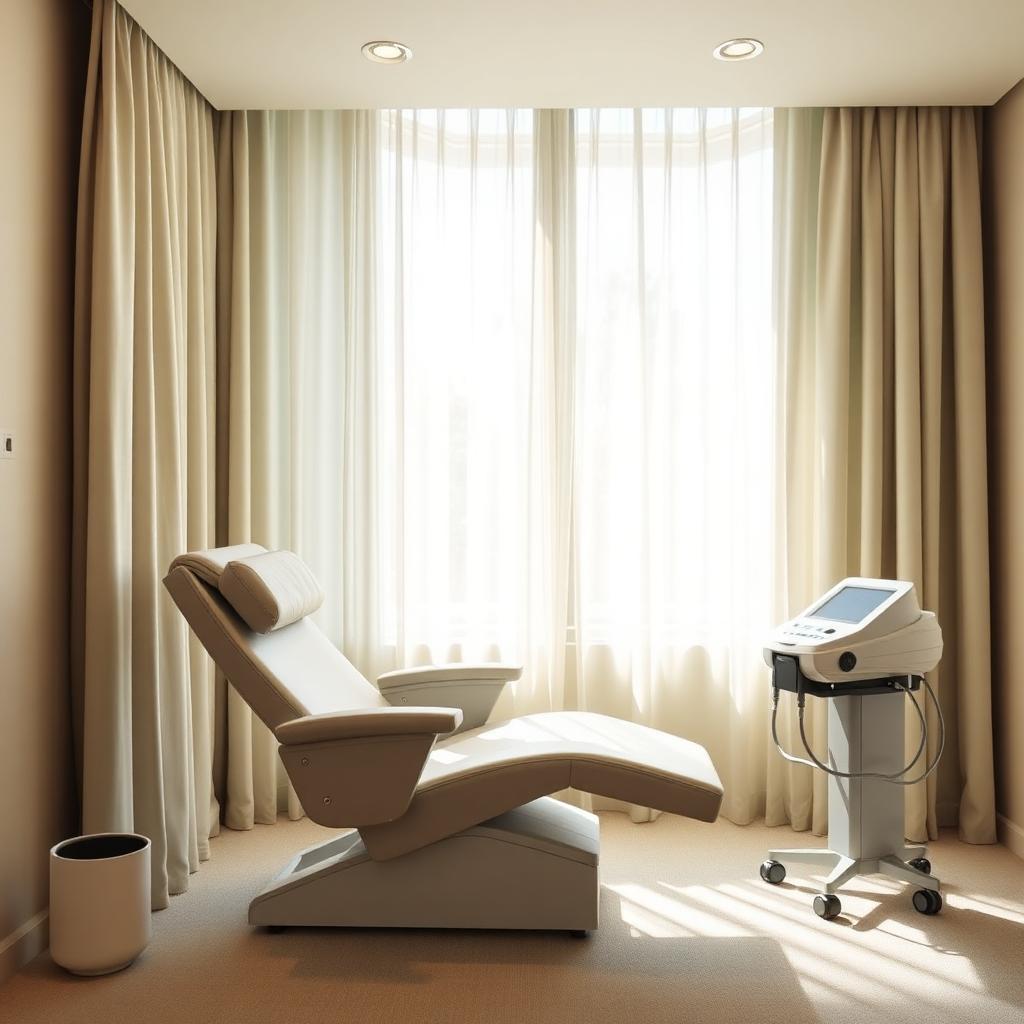
You check in, settle into a comfortable reclining chair, and put in the ear plugs we provide (required for every session). The magnetic coil rests against the left side of your head. The pulses feel like a light tapping — sometimes described as a woodpecker sensation — over the treatment site. It's not painful. Session 1 lasts about ten minutes.
8:10 AM to 9:00 AM — First rest interval
The fifty-minute rest interval isn't downtime for the sake of scheduling — it's the spacing your brain needs to consolidate what just happened. Patients typically read, answer email, take a call in a private space, listen to music, or simply relax. You're free to move around.
9:00 AM, 10:00 AM, 11:00 AM — Sessions 2, 3, and 4
Each session follows the same rhythm: about ten minutes under the coil, then roughly fifty minutes of rest before the next one. The scalp sensation often becomes less noticeable as the week goes on — most patients report that by day three, it barely registers.
Around 11:50 AM — Session 5
Your fifth and final session of the day. When it's finished, you're done. You drive yourself home — no sedation, no anesthesia, no restrictions on activity.
The rest of the day
Live normally. There are no dietary restrictions and no activity limitations with TMS. Many patients work remotely in the afternoons, meet family for dinner, or use the time to rest. The one thing worth protecting is your sleep that night — you want to arrive rested for the next day.

How each day differs from the last
The mechanics of the day stay the same, but a few things shift. Your motor threshold — the individualized pulse strength calibrated to your specific brain — is rechecked on days 2 and 3 to make sure the dose is right. Scalp sensitivity tends to decrease. And by mid-week, some patients begin to notice small shifts in mood, sleep, or the mental static that depression brings with it. Others feel nothing yet, and that's normal — and important to understand.
About that timeline: not everyone feels it by day five
This is the part we discuss in detail before treatment begins. In the most recent study of this exact 5-day schedule, early responders had improved about 69% by day five. The rest saw little change by day five — and then went on to improve about 36% over the following two to four weeks.
In other words: the last day of treatment is not the moment to judge whether it worked. That's why we continue tracking your symptoms weekly for a month after your final session using a short remote questionnaire. You don't need to come in for those check-ins, and there are no additional TMS sessions during that window — but that follow-up period is where a lot of the improvement actually shows up.
What side effects to expect (and what not to)
- Headache — about 28% of patients, usually mild and relieved by over-the-counter pain medication
- Fatigue — about 9%, most often on days 3–4
- Scalp discomfort at the stimulation site — about 8%, and typically decreases as the week progresses
- No cognitive side effects: TMS does not affect memory, concentration, or thinking
- No systemic side effects like weight gain, sexual dysfunction, or nausea
- Seizure risk is extremely low — under 0.003% of sessions (roughly 1 in 44,000)
What working professionals actually rearrange
For most of the professionals we treat, the honest math looks like this: you block off five weekday mornings, work from your phone or laptop during the rest intervals, and use afternoons for anything that requires focused presence. Compared to the traditional six-week schedule — thirty to thirty-six visits stretched across a month and a half of your calendar — the disruption is contained to a single week.
The bottom line
The 5-day intensive is structured to fit around a real life, not the other way around. You'll spend about twenty out of a hundred and twenty waking hours that week receiving treatment. The rest of the time, you're living your life — and, for many patients, quietly noticing that something is beginning to shift.
If you're weighing whether the format could work for you, the next step is a personal consultation to review your history, confirm eligibility, and design a plan around your specific situation.